
Toll Free: 800-824-9555 

My Account   |   Pay my Bill   |    File a Claim   |    Get a Quote   Find an Agent    |     Contact Us

  • Agent Portal

Tag: Residential Safety

Water Damage

Water Damage: How to Prevent It

Homeowners Inspection Checklist
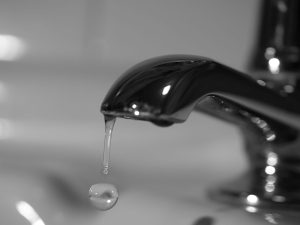
water damage_slow leaking faucetEach year, our policyholders suffer from thousands of dollars in water losses due to rusted out water heaters, worn out washing machines and dishwasher hoses, and bad ice maker connections. Many of these losses can be prevented by making a few quick and simple checks around the home.

One of the main sources of water leaks is the water heater. Look around the case of your water heater for rust spots and seepage. If you have a drip pan, make sure it is properly installed and is not full.

Another area to keep an eye on is your washing machine. Check your washer hoses and their connections. The rubber should be soft and the connections should show no signs of seepage. To be safe, we recommend that you replace your washer hoses every six years.

The kitchen also has appliances prone to leak. Check for seepage or leakage around your dishwasher and ice maker connections. Most of these are found under the sink. Look behind the refrigerator at the ice maker lines. Check for leaks, good connections, and the condition of the plastic lines. If the lines are discolored or cracked, then it needs to be replaced. Look under your kitchen sink to make sure nothing appears to be leaking.

For added protection, consider investing a little extra money in high PSI braided stainless steel hoses as well as water leak detectors. Also, keep an eye on your water bill. If your usage increases without explanation, it may mean that there is a leak somewhere in your home.

6-Month Inspection Checklist:

✅  Look at water heater for rust spots or seepage
✅  Check washer hoses and connections
✅  Check dishwasher connection for seepage and leakage (usually under the sink)
✅  Check ice maker connection (usually under the sink)
✅  Check the ice maker line behind the refrigerator

If you do incur water damage, please contact your FMT agent as soon as possible or call us at 800-824-9555. Please note that not all policies have coverage for water damage and coverage will depend on the type of loss (repeated or continuous damage is probably excluded). Check out upcoming articles for more information about types of water damage and what to do if you have a water damage loss!
Largest Residential Fire Hazard

Dryer Safety

By Charles Coones, Forensic Investigations and Technologies

We are fully into the fire season and fires are often the leading story on the evening news.  We typically assume that the start of heating season coincides with the start of fire season and therefore heating systems are a large cause of the residential fires we all see.

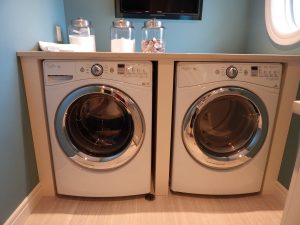
However, the largest residential fire hazard is with us throughout the year and you probably pass by it daily.  It is your clothes dryer.  FEMA reports that over the three years 2008-2010, almost 83% of residential structure fires started in the laundry room.   In those cases, 92% of the fires originated in the dryer.

whirlpool washer and dryer

Here are some interesting facts:

  1.  Gas or electric dryers: makes no difference.  The incidence of fire is about the same.
  2.  Over a third of these fires are reported between 12PM and 7PM.
  3.  Dryer fires are reported throughout the year, but almost 40% occur November -February.
  4.  About 34% of the fires were related to a failure to clean
  5.  Interestingly, it is almost a dead heat between what ignites first – the dust and lint or the clothes in the drum.  We investigate a lot of fires where the fire starts in the drum of the dryer.

Ignition of clothing can be due to placing improper items in the dryer (don’t dry your flip-flops) or spontaneous ignition of the clothing.  Clothing can spontaneously ignite inside or outside the dryer after the clothes have been dried and removed.  Note we see many fires in commercial laundries that occur in clothing that has been dried and piled or stacked together.  Research into these spontaneous ignition fires finds that most often a contaminant, such as vegetable oil or a petroleum product, had soaked into the clothing/towels/rags.

These contaminants can exhibit self heating, especially where they are heated in dryers in placed in piles where the heat generated by the decomposition of the materials cannot be dissipated.  Linseed oil is often described as the cause of self-heating fires, but cooking oils (such as sunflower, olive, or canola),  massage oils, and petroleum products can also exhibit self-heating behavior.   These contaminants are not well removed by standard washing machines.  Testing by Fire Findings found that after three hot water washes, vegetable oil remains in typical towels.

So, what do we do?

  1. Ensure that dryers are only used when the house is occupied.  Strong odors from the dryer are indicative of the start of a fire.  Turn the dryer off and call the fire department.  Do not open the dryer.
  2. The Building Code requires that dryer vents be of limited length (including bends) and discharge directly outside.  Most dryer manufacturers and the Code require that dryer vents be rigid or corrugated metal.
  3. Remove lint before each load of laundry and clean the vent and the interior of the dryer periodically; two year intervals is recommended.
  4. Promptly remove dried clothing and separate. Do not place or pile recently dried clothing into plastic bags, hampers or carts.
  5.  Use disposable towels in the kitchen or when working on the car.  Dispose of these in metal containers with tight fitting or “flame out” lids.
  6.  You can always use clothes lines instead of dryers.  I have yet to investigate a clothes line fire.